I really want to start treating this like a diary again. I have failed before, but hopefully this is a small success. If it does end up as a failure, you will notice because it won’t update. I will try. Failure is normal, it is expected, and I probably will again and again. Anyway, here’s my attempt.
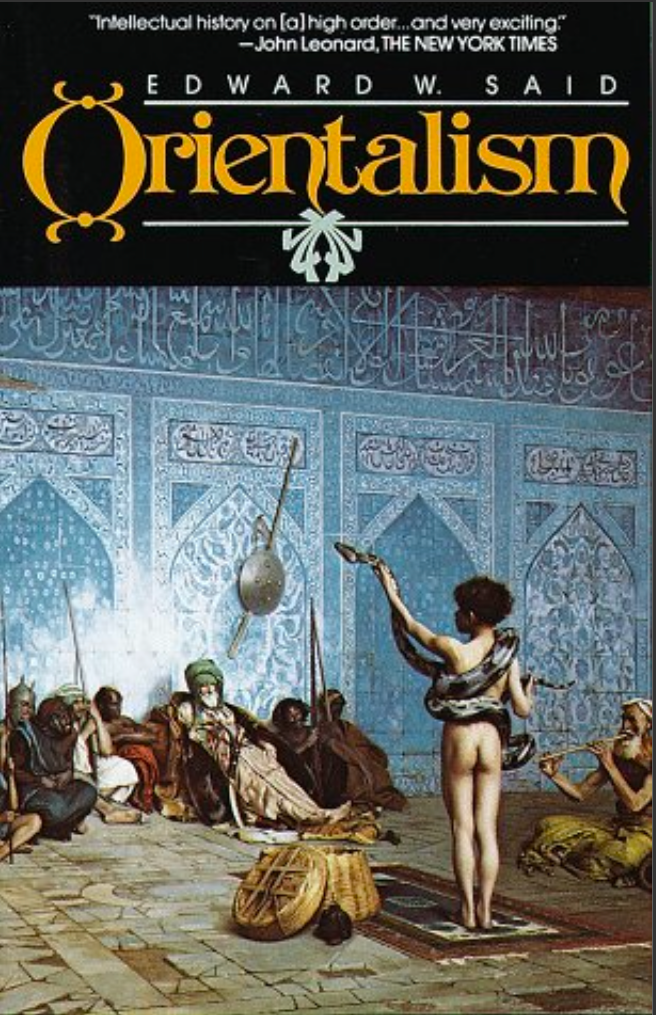
One of the things that I’ve started to do is to read Edward Said’s Orientalism, and I think it is a fascinating book. It’s not often that I spend more than a single day reading a book, yet somehow I’ve been captivated by Professor Said’s scholarship. Reading it has become a daily activity for me. As I walk and I run, I read passage by passage, because it is just that interesting and that worthy of the evaluation on a day-to-day.
Interestingly, it’s also one of those things that makes me want to capture down what I think and what I don’t think, and not necessarily even in a perfect way. Even in searching the immediate impressions that it has left, I find that it has left so many different footprints which I have yet to completely explore or traverse.
What stands out most immediately is this idea of how representations shape reality, and how what we see is affected by the assumptions and the way that we think about this given world.
Amongst other things, it showed to me how just a few people can end up shaping how entire groups of people think of countries, nations, people, civilizations. I think that that is a fascinating insight, because, amongst other things, it is one of the beautiful embodiments of the realization that in any given society it is not necessarily the great mass of people who would decide how civilization would see itself.
Rather, it is only a few people who, although they might be limited in their access to the world at large, might somehow still end up shaping what people think about, appreciate, and eventually understand, in a game of what one might call—perhaps in a way that Professor Said would not approve of—Chinese whispers.
This is how we understand the world, one might say: the scholar or the like just read a book and decide that that is indeed how certain people are, how certain classes of people are, how others should see whether Christians, Muslims, Buddhists, people of every single race or religion, mediated through little representations made with sensors that we use to appreciate only small, local, and immediate parts of it.
It is quite surprising to think about this idea.
At least for me, it has been interesting, because I didn’t always reflect upon this: how, in fact, the things that we read end up distorting reality, even if they are meant to create factual representations of it. It is a funny insight.
I wonder if the books that I have read all this while have been giving me a false representation of the world.
Somehow or another, they feel as though they have not yet.
Somehow or another, a lot of the things that I have thought about have been confirmed by them.
Of course, maybe that’s one of the symptoms of being a victim of representations—or, if not a victim, then a selector of these representations and the things that they show to us.
It is also nice somehow to learn a whole ton of new words, and also about skills of thought, just because Professor Said mentions so many different concepts that I find interesting and that I find myself inclined to just research and understand for long stretches through the reading.
To say that I have synthesized everything would really be a lie, and I’m sure that this thought process is going to shift and evolve in response to new information in the days ahead.
For now, what I can say is that all of this is fun, and it’s nice to act like a student and also to write like one again.